Stytch
·
2023
Docs
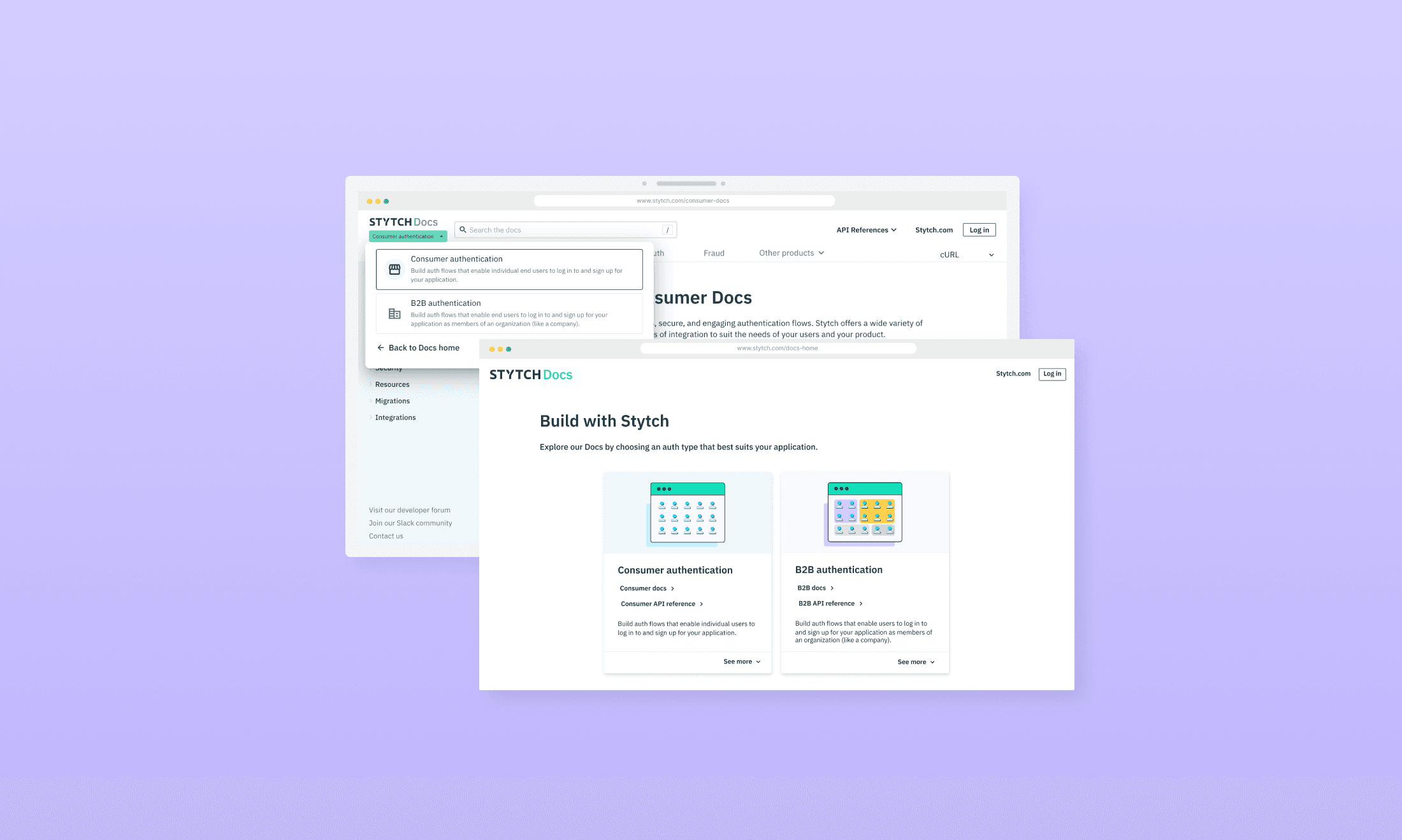
Redesigning Docs, Stytch's developer documentation experience, ensuring users can navigate new changes driven by B2B product expansion.
Role
Product designer, Researcher
Team
Technical content manager, Engineering, UX research
Contributions
UX / UI design, Visual design, Research and usability testing
Context
Stytch, an authentication (auth) platform for consumer-based companies, decided to expand its product offerings to B2B companies.
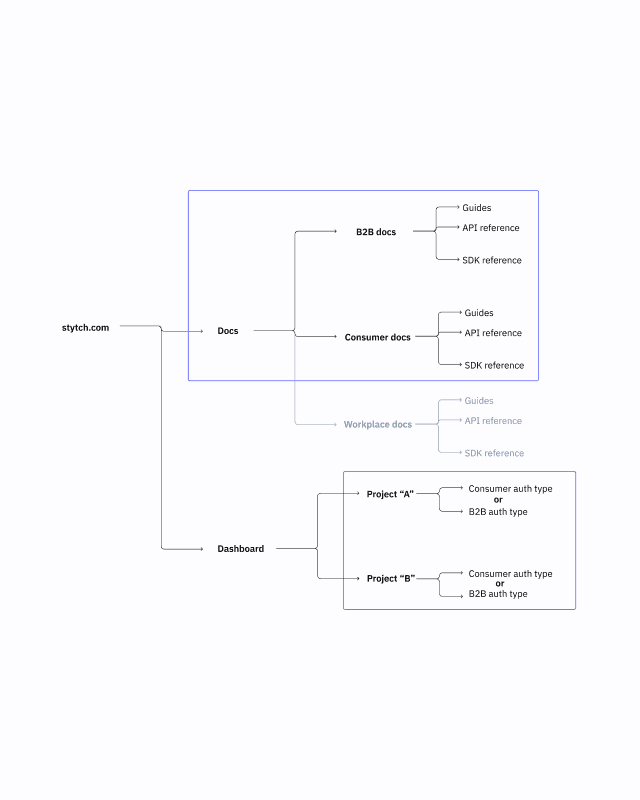
This caused a bifurcation, separating products and content into two distinct categories: Consumer and B2B auth.
Problem
B2B auth differs from consumer auth, requiring changes across Stytch's various surface areas, including its developer documentation (Docs) which is known as the blueprint for developers to build their application.
Objective
Identify the downstream impacts of bifurcation and redesign Docs to support this new auth type—guiding users to 1. Determine the applicable auth type for their project, and 2. Easily find and navigate the relevant documentation.
Mapping the landscape
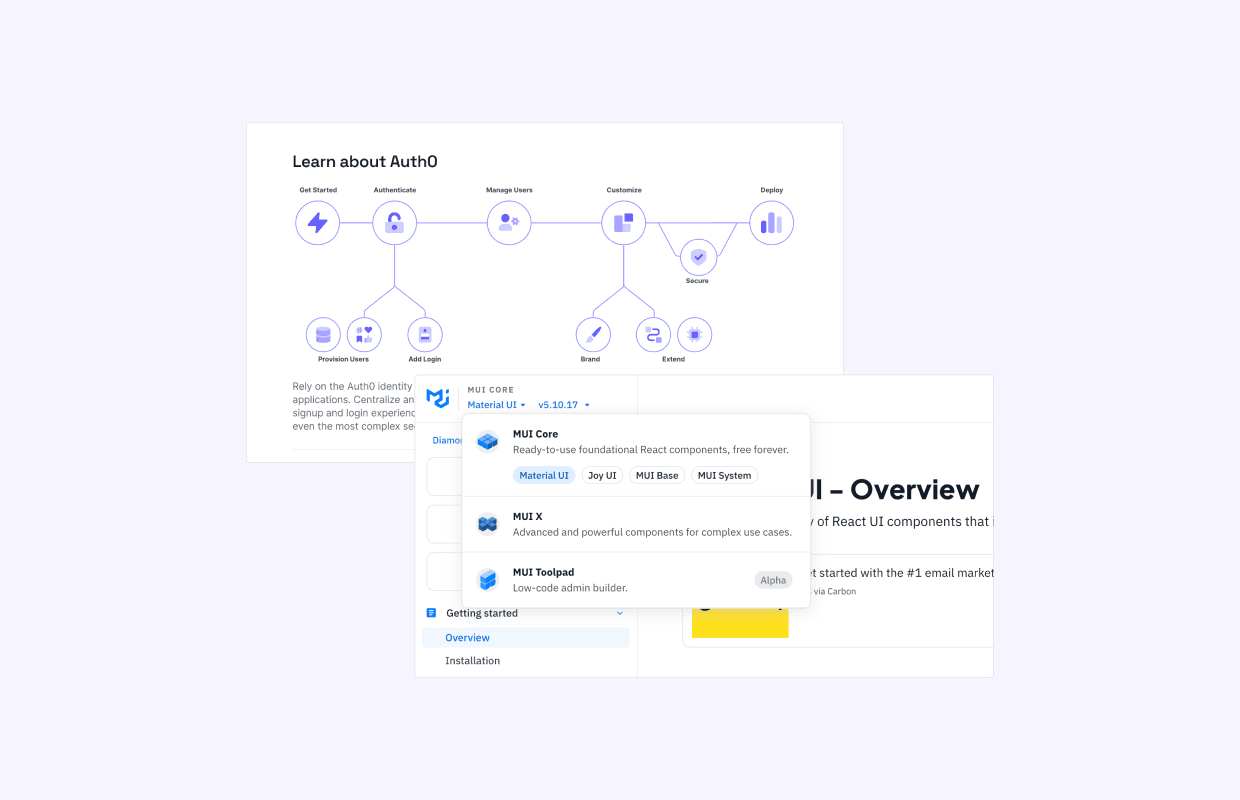
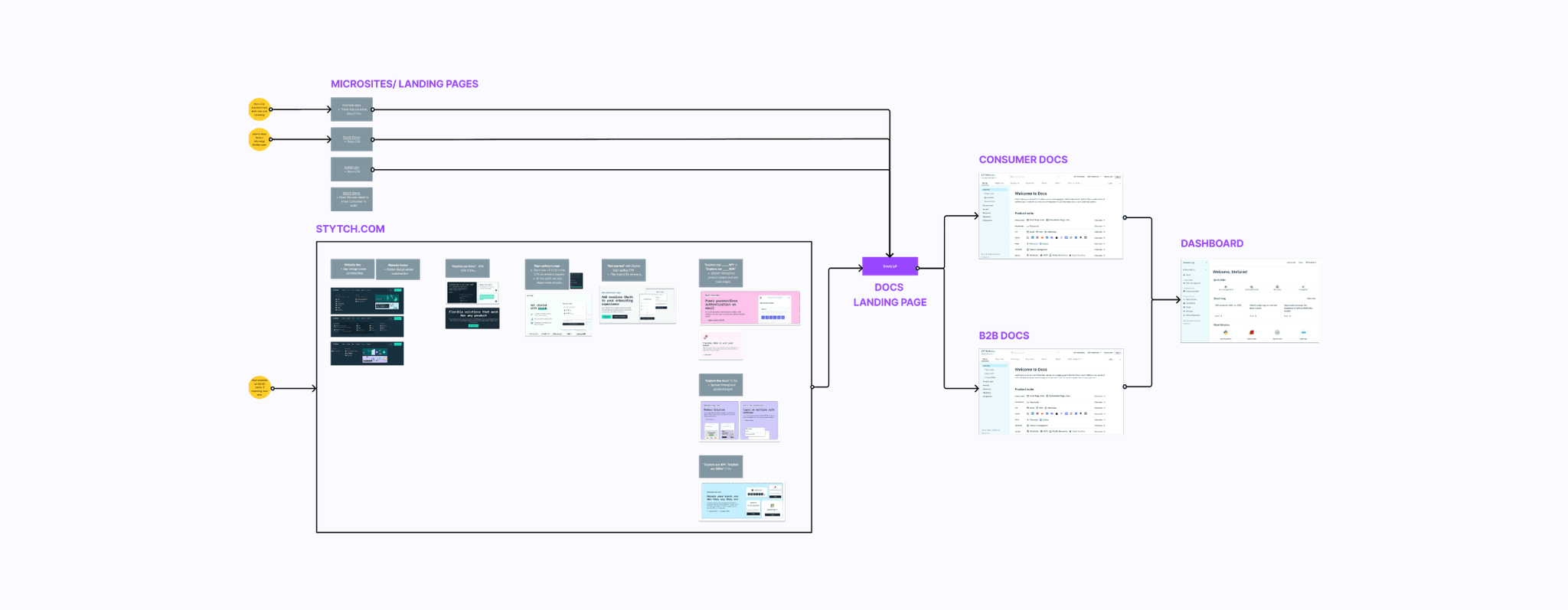
How do other auth companies approach content reorganization, and how does bifurcation fit within Stytch’s current architecture?
To align cross-functional partners, I conducted comparative research, audits, and mapping exercises to help teams visualize ripple effects and inconsistencies across surfaces.
From discovery to design
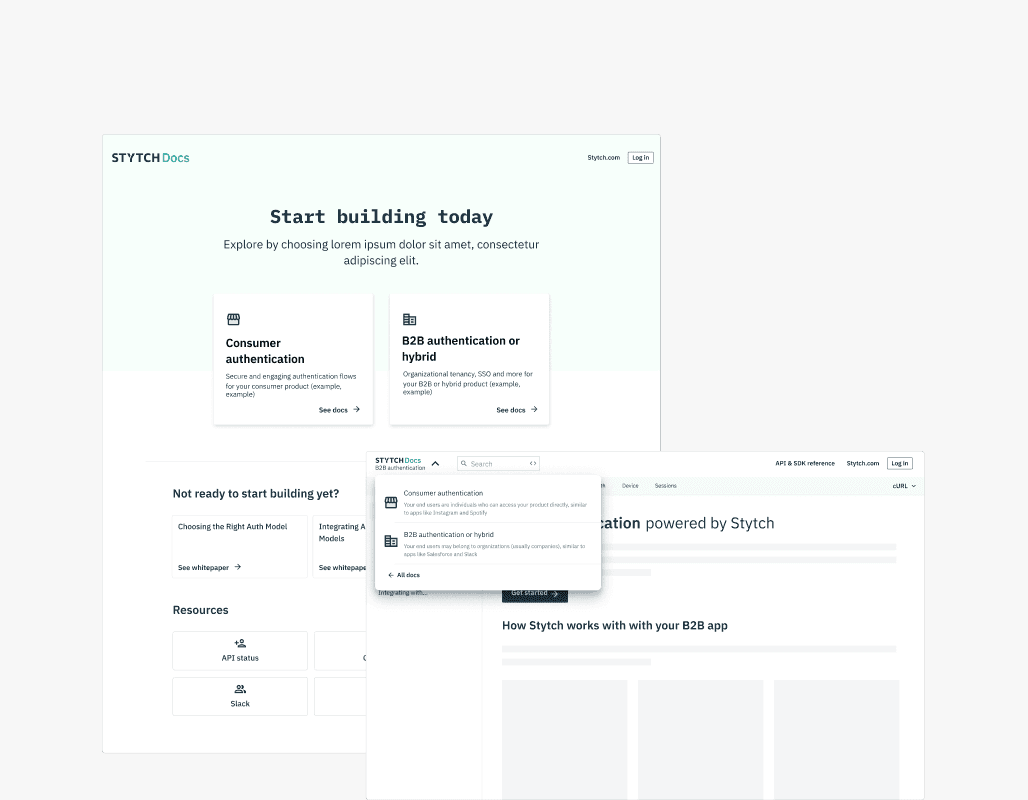
After the discovery phase, I shifted into low- to mid-fidelity design exploration to resolve inconsistencies in the user journey—focusing on high-touch interfaces like the landing page and the consumer and B2B auth homepages.
Visually, I blended patterns and design details from Docs, Dashboard, and stytch.com while keeping scope intentionally tight.
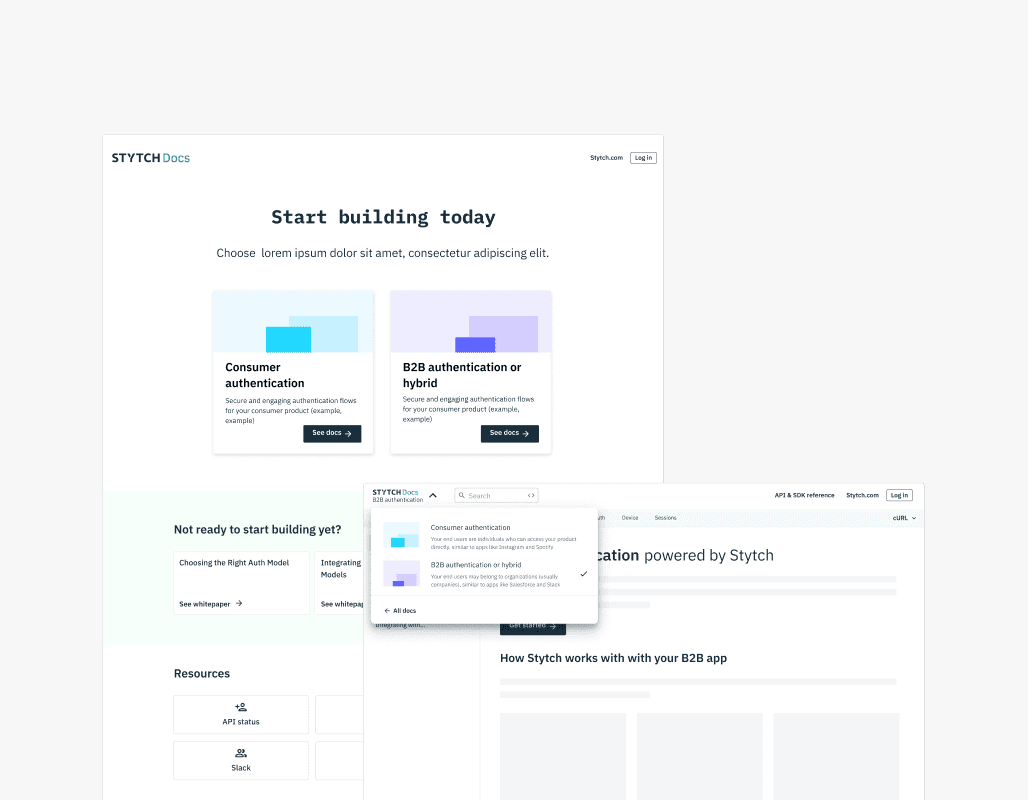
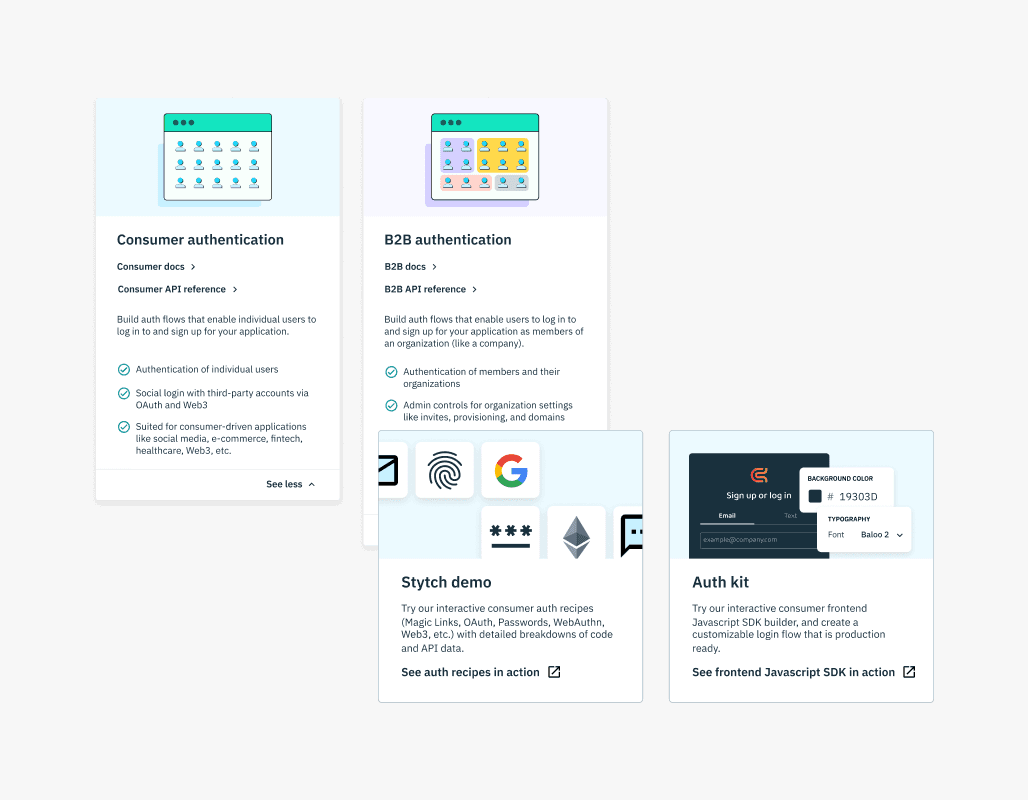
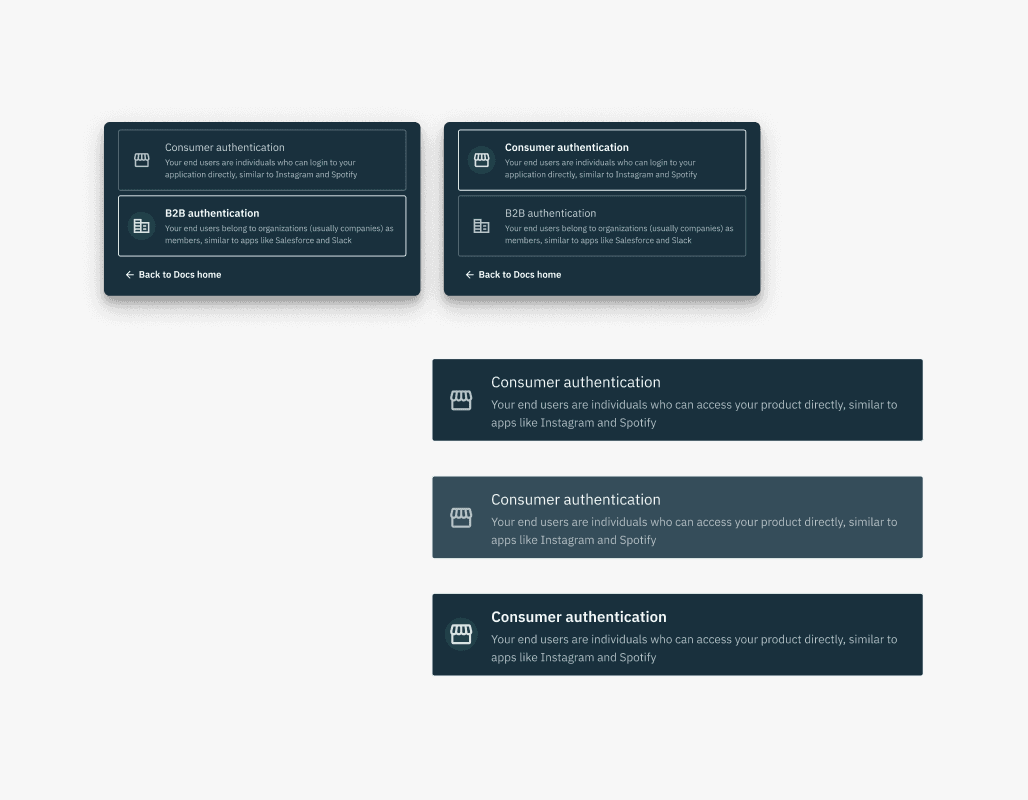
Home page

Navigation

Leading research
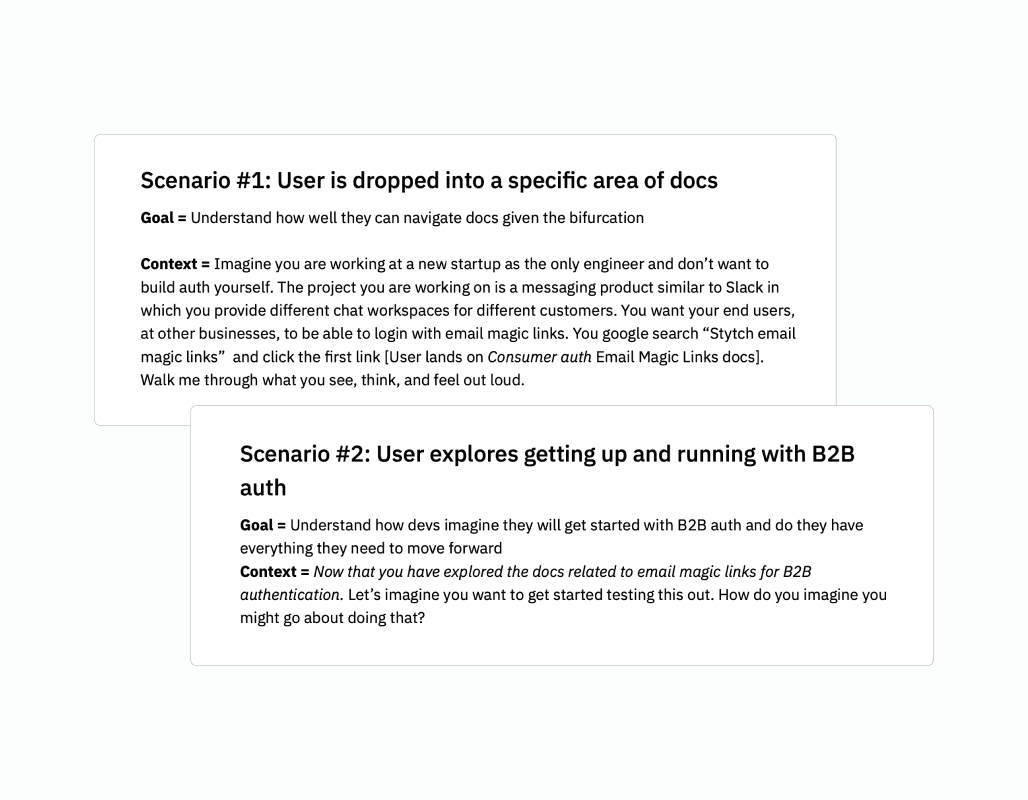
To gather quick feedback and validate direction, I led a round of usability testing—consulting with our UX researcher to shape the test plan, define scenarios, write the script, and build prototypes.
I sourced qualified participants through Respondent and conducted 5 usability sessions, which revealed key patterns to guide Docs forward.
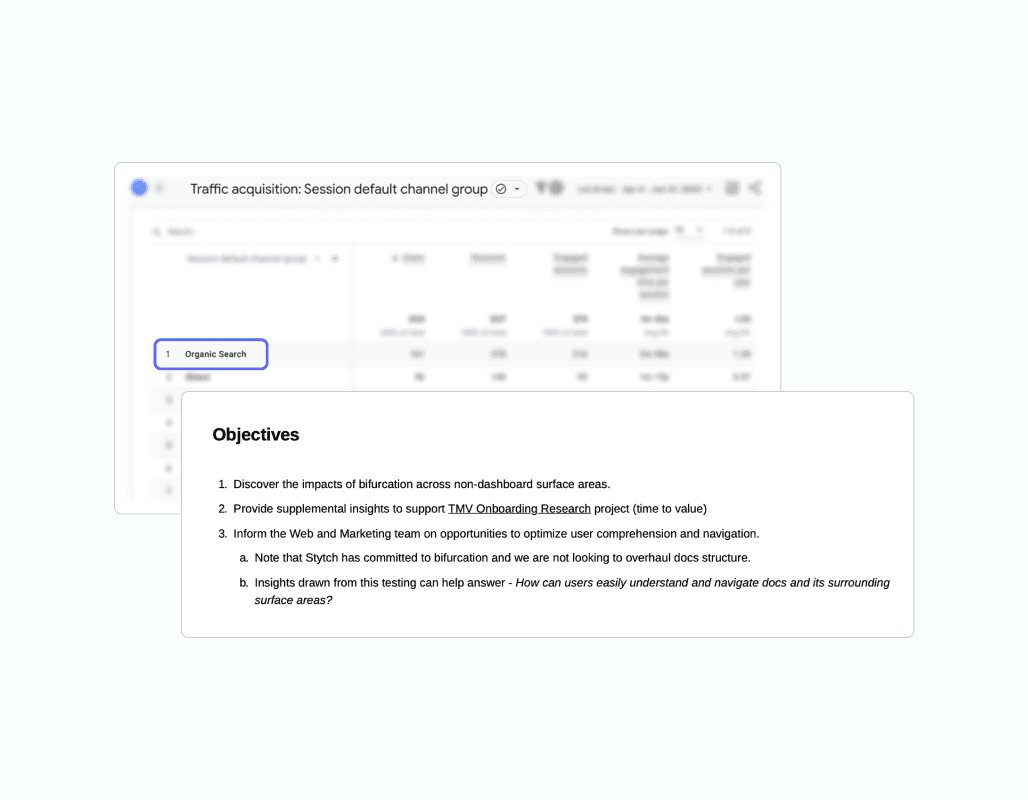
Results and takeways
The Docs home page remains a hub for users, particularly developers, with continuous additions of new developer resources on this page.
New experience
Key learnings
01
Shared language is essential in a technical environment. I found it helpful to consistently prioritize defining and documenting new/changed terminology early, even if concepts were still evolving.
02
In early-stage teams, reliable data is often scarce, making it challenging to guide product and design decisions. In these cases, advocating for usability testing and close collaboration with GTM or even sales roles can provide helpful direction.
03
Collaborating with partners outside the product organization can be invaluable. Tapping into their technical expertise enabled me to push the vision further as well as resource for north-star designs.
Other case studies